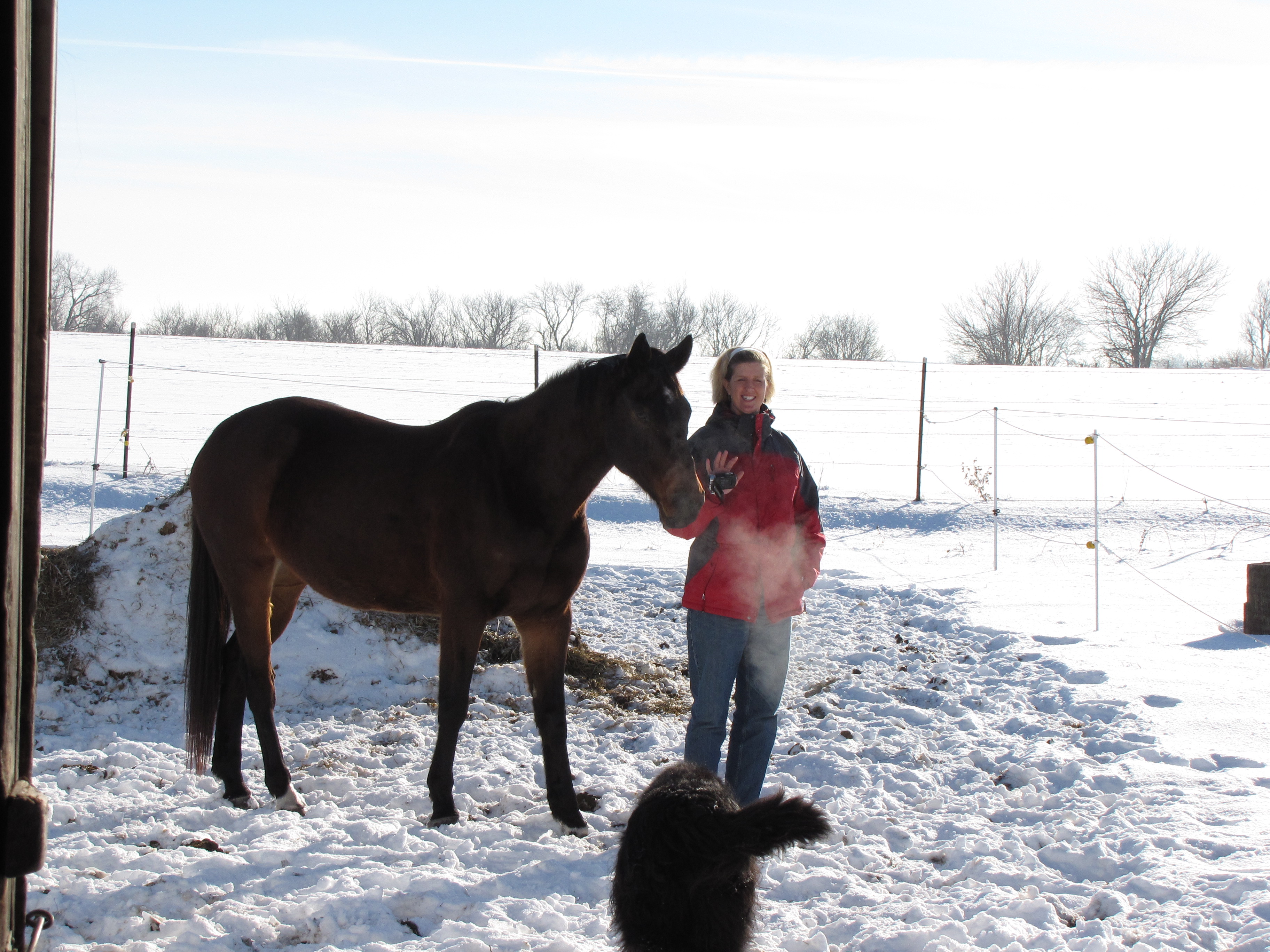
Dressage Day at Rolex

DSCN1489

Dressage Day at Rolex had us arriving at the park at 7:30 a.m., in the hope that the trade fair would be open before dressage started at 10. This is how the head of the lake looked at 7:30 in the morning on our walk in. How cool.

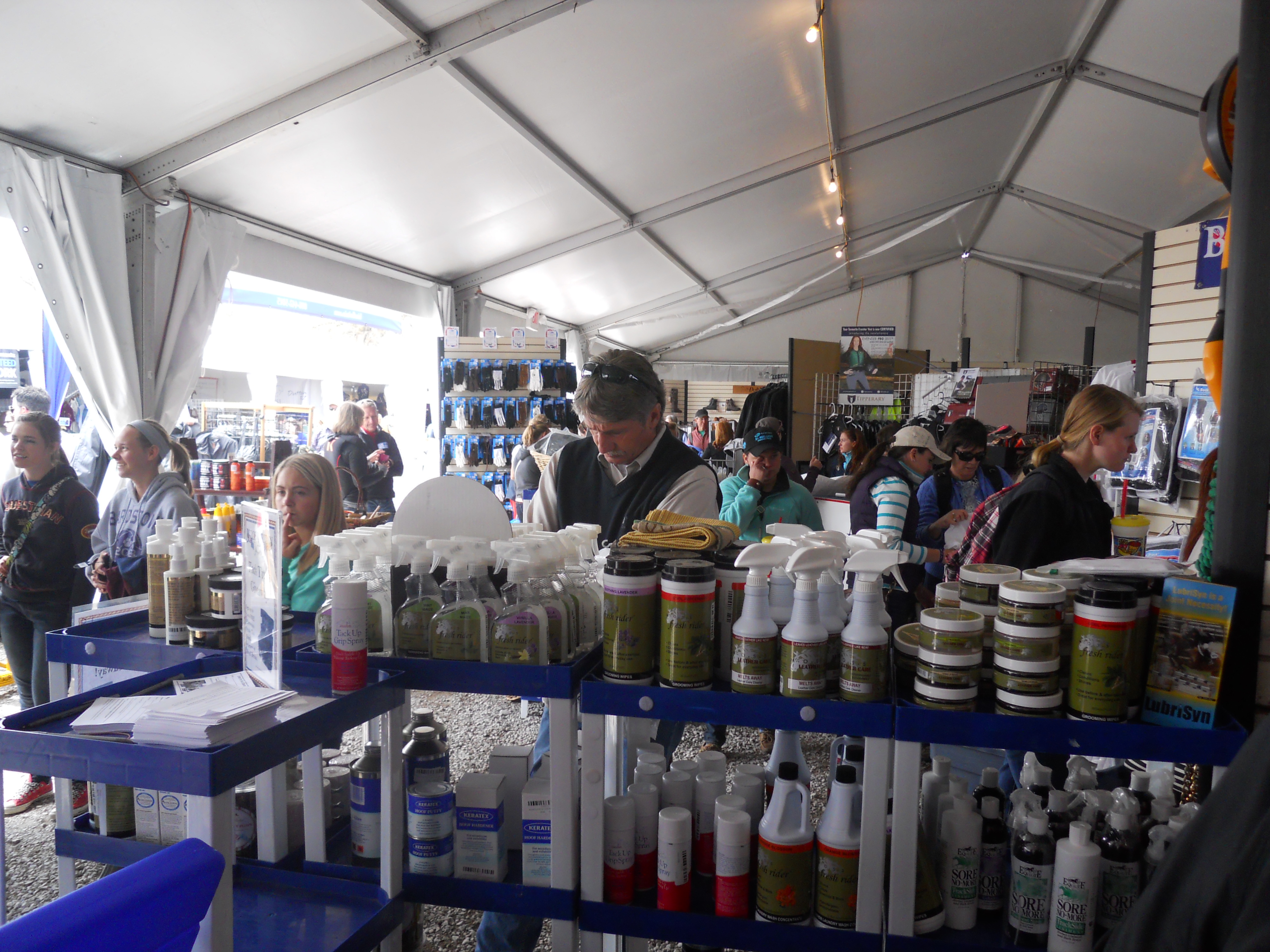
How the trade fair actually looks at 7:30 in the morning.

How the trade fair actually looks at 7:30 in the morning.

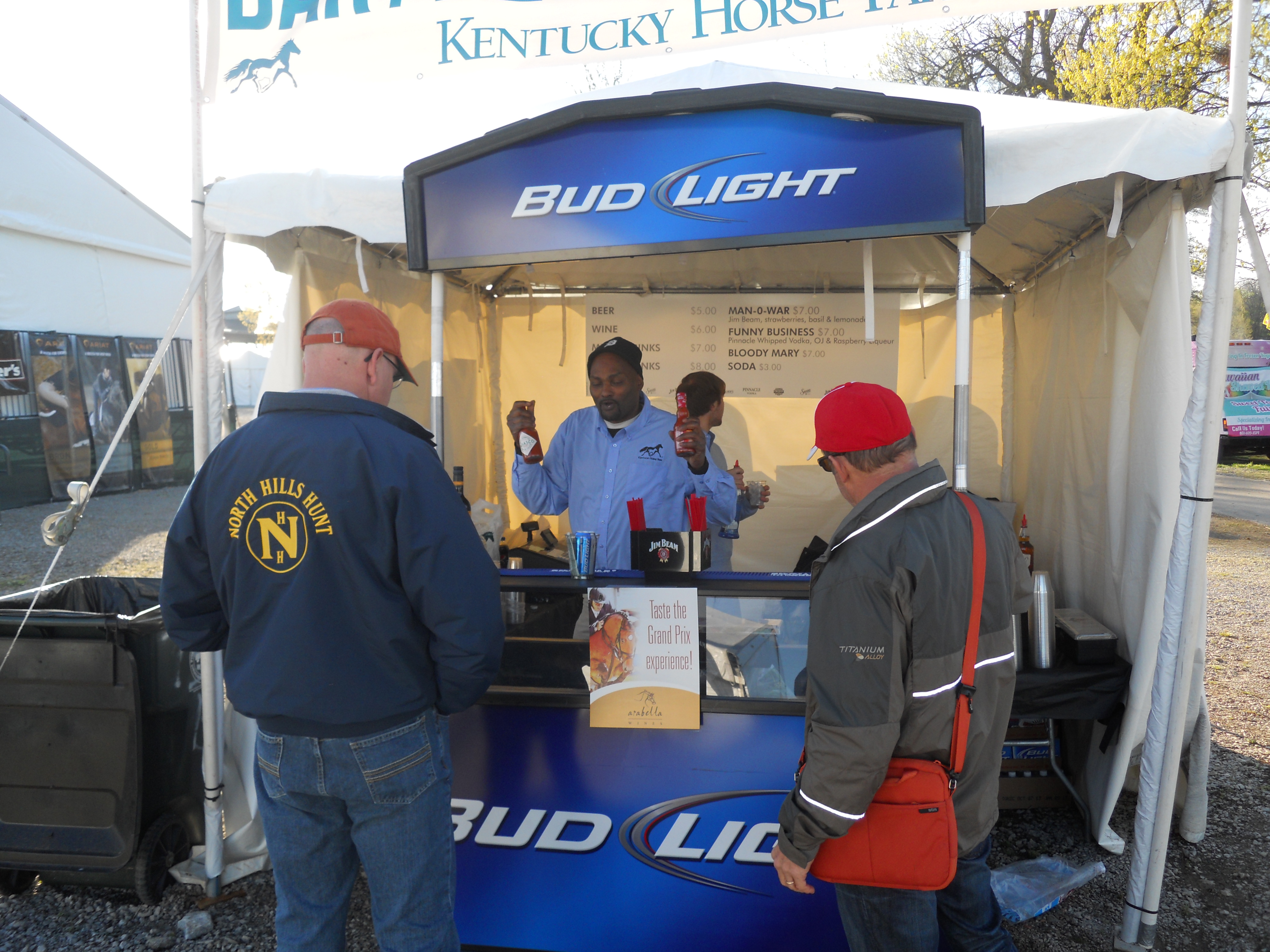
Not to worry, the bar is open at 7:30 a.m.  Go Kentucky Horse Park!  Big John fixed the wanna-be shoppers up with consolation bloody marys.

Not to worry, the bar is open at 7:30 a.m. Go Kentucky Horse Park! Big John fixed the wanna-be shoppers up with consolation bloody marys.

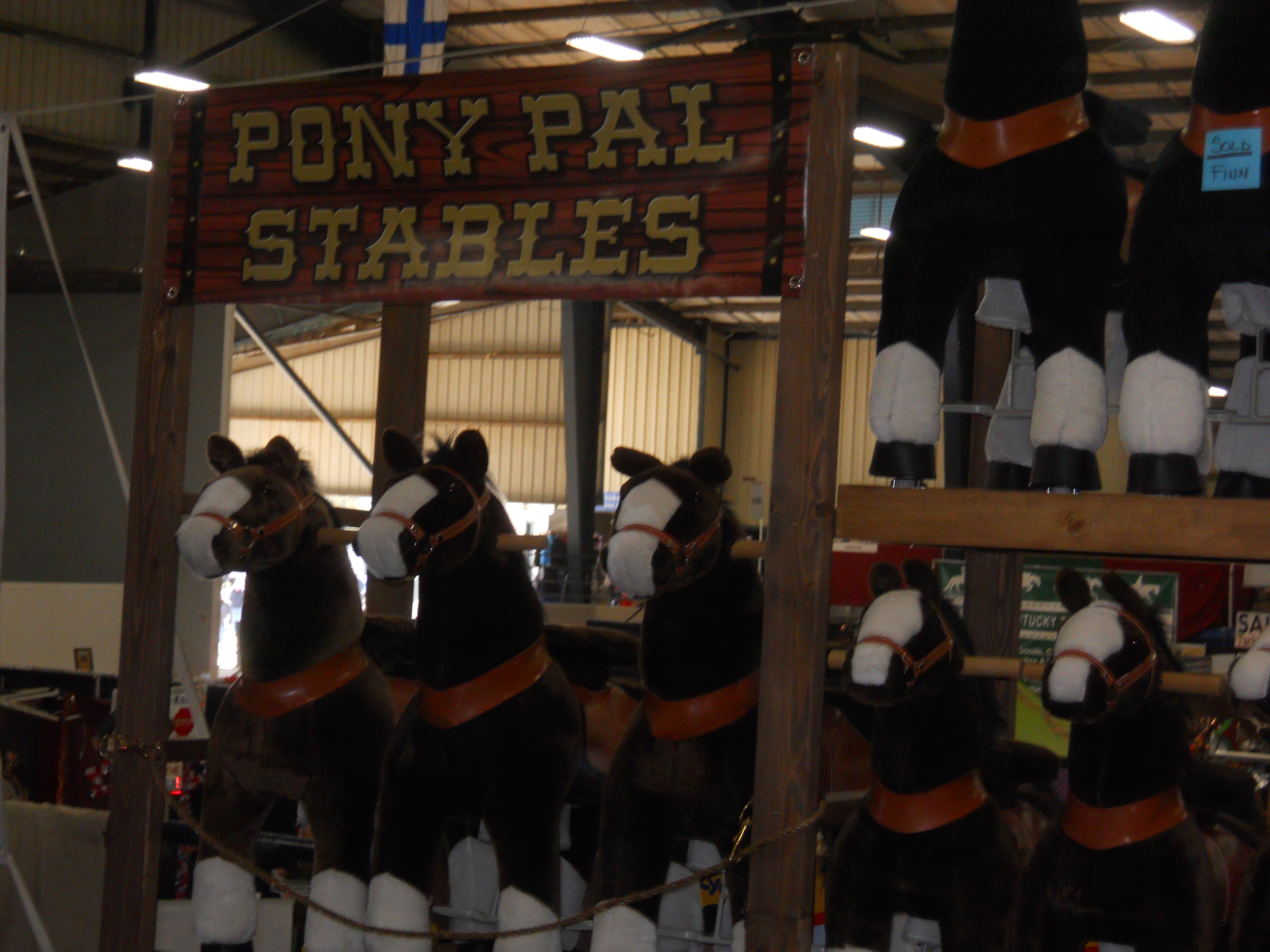
The trade fair opened at 9.   Anything you want is available at the trade fair, including these ridiculously adorable Pony Pals.  They are rideable!

The trade fair opened at 9. Anything you want is available at the trade fair, including these ridiculously adorable Pony Pals. They are rideable!

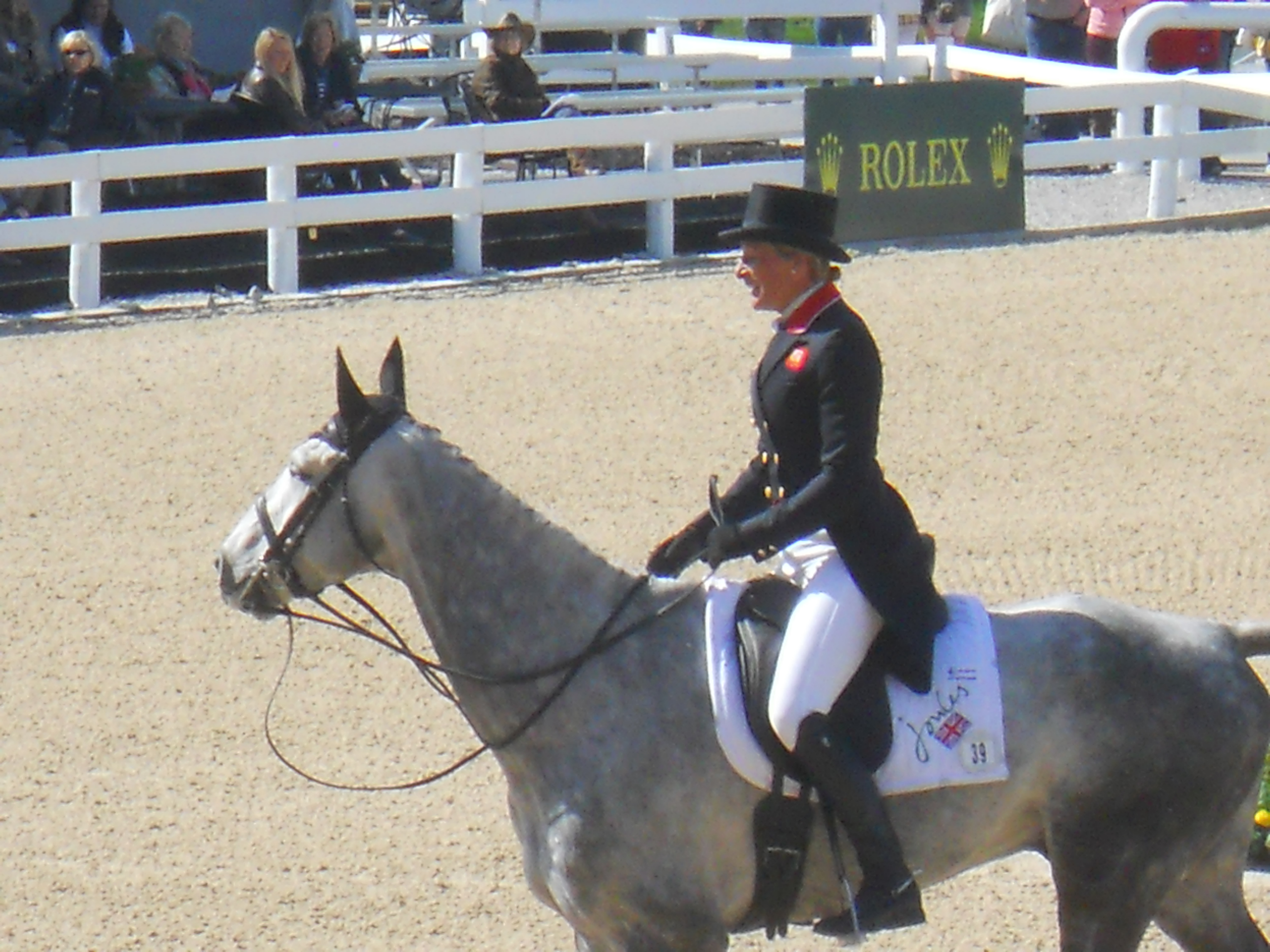
Mary King leaving the ring after a beautiful test.  Sally O'Connor said she had the best shoulder in of the event so far in the competition.

Mary King leaving the ring after a beautiful test. Sally O’Connor said she had the best shoulder in of the event so far in the competition.

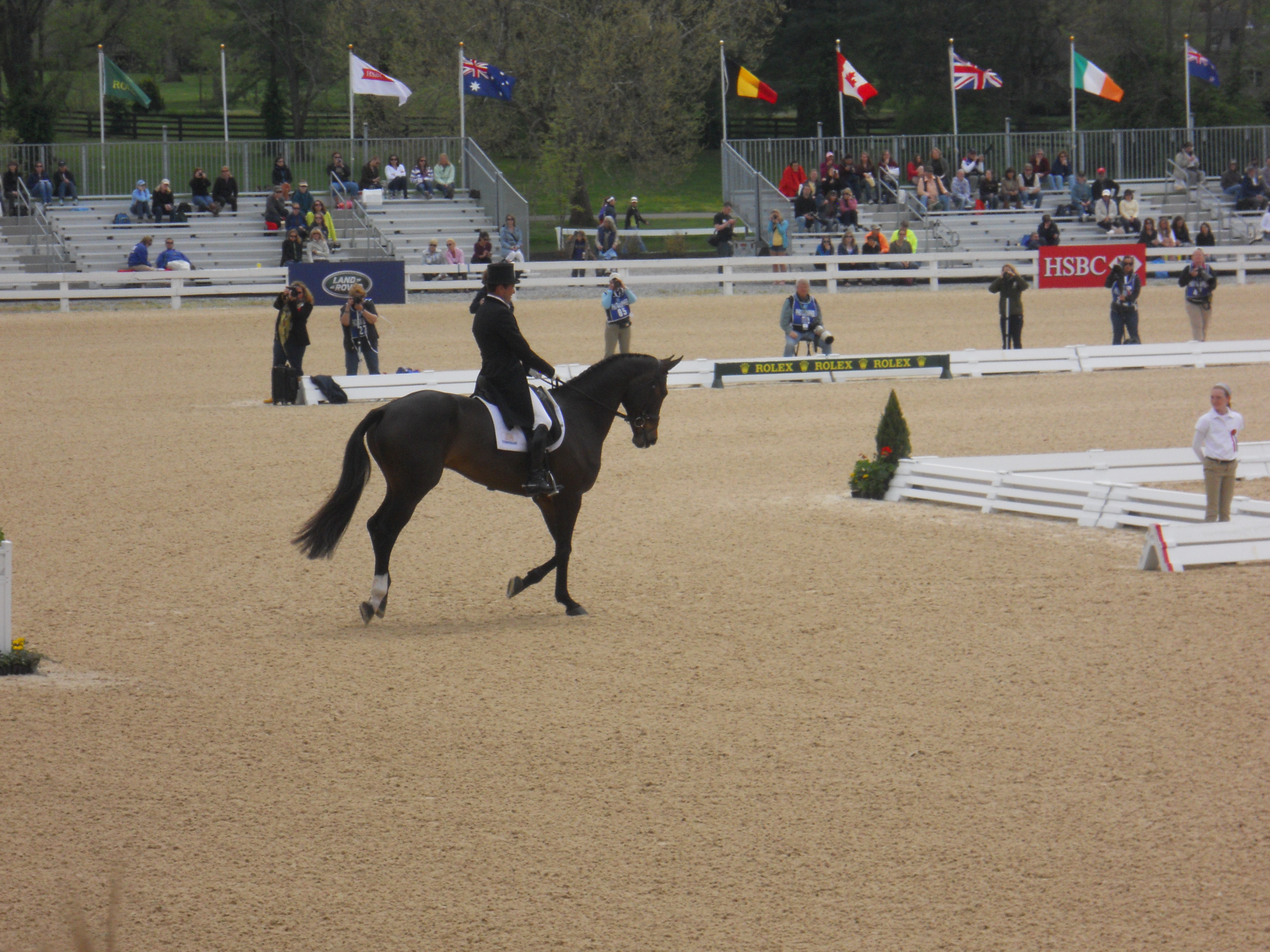
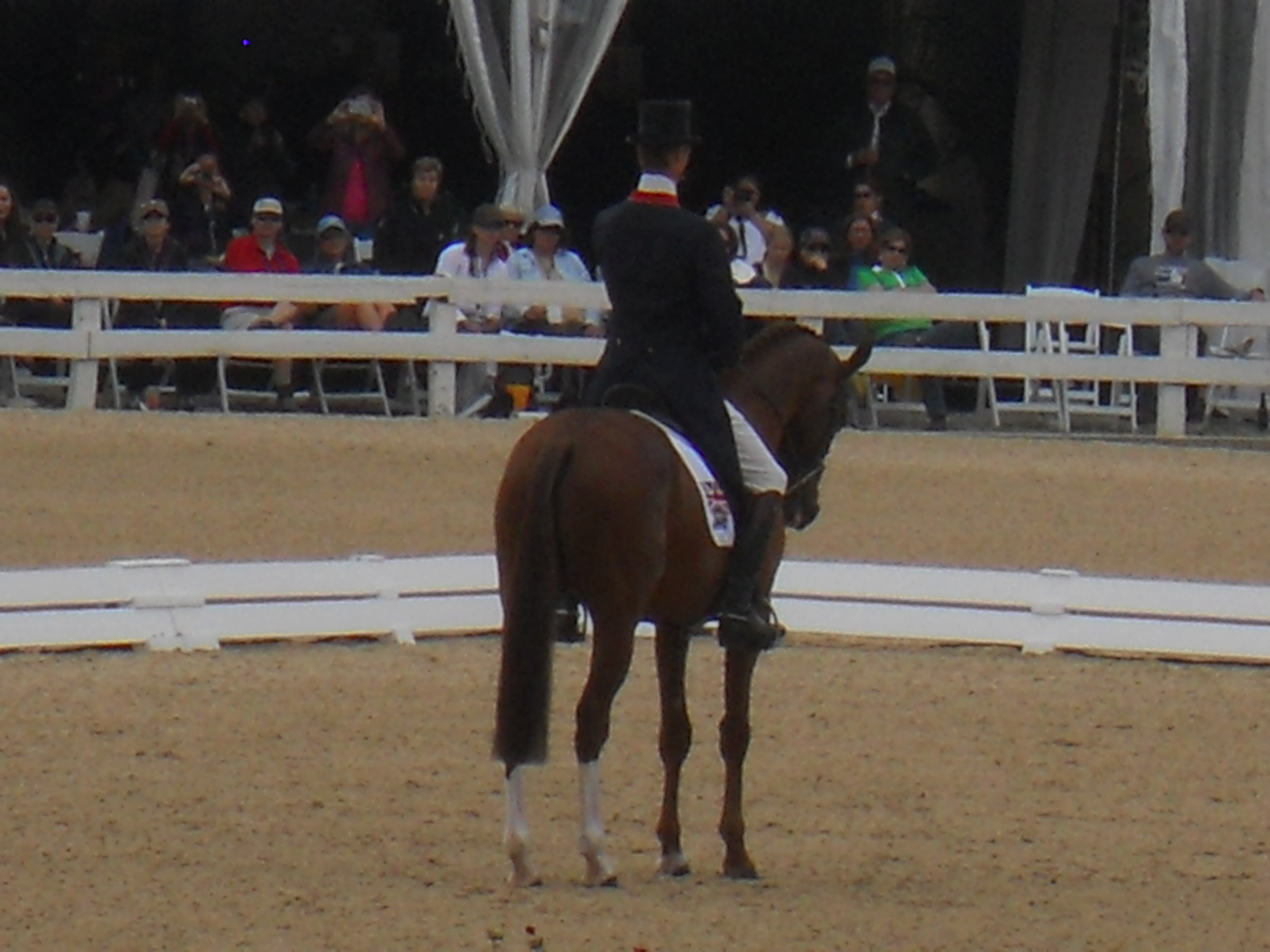
I loved this horse's outline, though I don't remember who it was!

I loved this horse’s outline, though I don’t remember who it was!

Bit of Britain on site store.  Seriously excellent.  Scored 2 pairs of gloves, 2 saddle pads and more...

Bit of Britain on site store. Seriously excellent. Scored 2 pairs of gloves, 2 saddle pads and more…

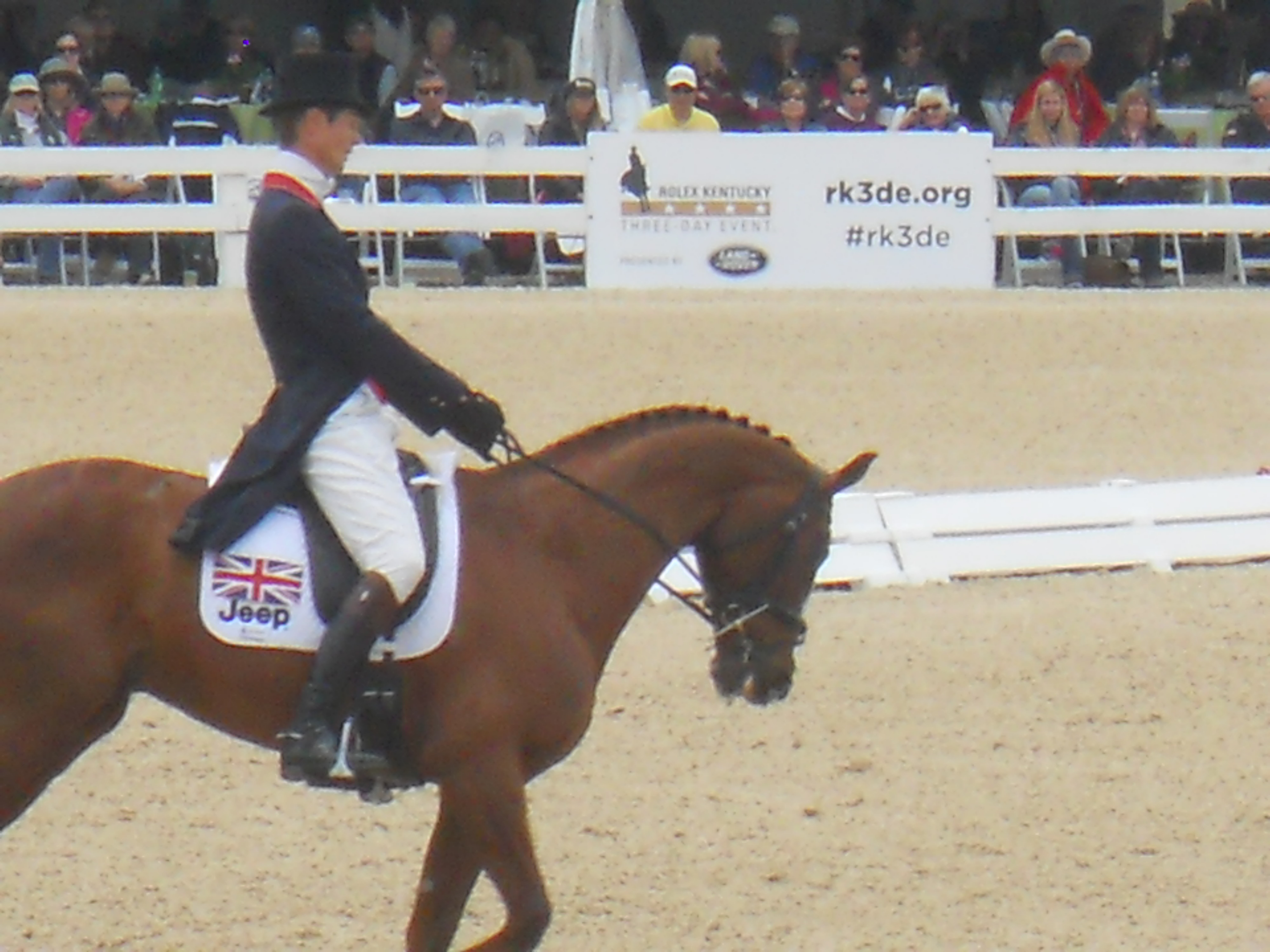
William Fox-Pitt. What fun to watch him ride a dressage test. He and Mary King make it look joyful.

More WFP

More WFP

During a dressage break.  Had to do the Bruce Davidson statue picture.

During a dressage break. Had to do the Bruce Davidson statue picture.  With the Stones.

In the evening, we went to Thoroughbreds for All where hall of farm jockey Chris McCarron blithely rode a pretty fresh chestnut tb who was a little intimidated by the crowd.  He spoke while he did it.  He was wonderful!  We wished we could have stayed for the whole program, but we had dinner plans

In the evening, we went to Thoroughbreds for All where hall of farm jockey Chris McCarron blithely rode a pretty fresh chestnut tb who was a little intimidated by the crowd. He spoke while he did it. He was wonderful! We wished we could have stayed for the whole program, but we had dinner plans

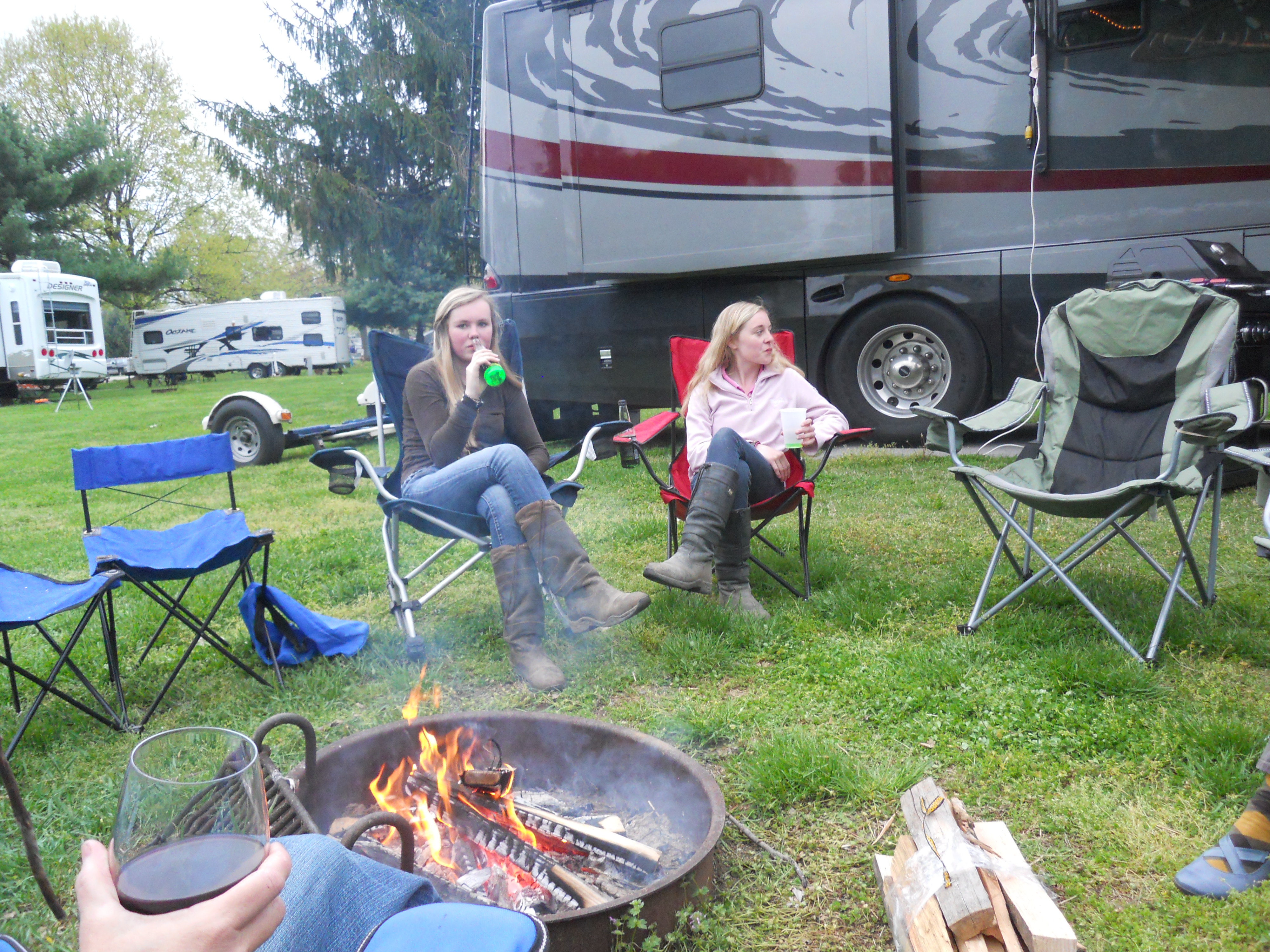
...with the Boyle's.  These lovely people are Maddie and Lilly.  Ricky and Julie were busy inside so, sadly, I didn't get a decent picture of them as night was falling.

…with the Boyle’s. These lovely people are Maddie and Lilly. Ricky and Julie were busy inside so, sadly, I didn’t get a decent picture of them as night was falling.

This is our magic bus.  Can you see what is wrong with this picture?

This is our magic bus. Can you see what is wrong with this picture?

Could be the bottle of wine that determinedly stayed on the roof for the drive from the hotel, to Thoroughbreds for All and back to the Boyle campsite at Rolex.  Jay is a very smooth driver!

Could be the bottle of wine that determinedly stayed on the roof for the drive from the hotel, to Thoroughbreds for All and back to the Boyle campsite at Rolex. Jay is a very smooth driver!

Jeff and Margaret hanging out.  Ricky is grilling delicious things in the background.

Jeff, Jon and Margaret hanging out. Ricky is grilling delicious things in the background.

Jay relaxing.

Jay relaxing.

On to xc tomorrow!

Off to Rolex

Hey kids!

I’m in a minivan full of friends and we’re heading to the Rolex Kentucky Three Day Event in beautiful Lexington, KY.  Despite the fact that it will actually be warmer this weekend in the Land Of No Spring – Iowa, our dear home – than in Kentucky, it doesn’t even tweak the party because the galloping and jumping horses and equestrian super heroes are cranking it up in  Lexington this weekend.  Yessir.

The dressage phase started today and, thanks to Jon Chester loaning me his wonderful Mifi and Jay the OTR driver, I watched every ride while blazing east toward KHP.  Tomorrow is another day of dressage and you can watch while you are supposed to be working on Friday, by clicking here.

The Rolex leader board is here and all I can say is Go Becky Holder, midwestern girl, foxhunter goddess and all around good person.  Get ’em, girl.  Go OTTBs.  They’re everywhere this year. I guess the short format didn’t phase them.

Finally, I stumbled across this blog this week and I bet every eventer rocking the four star this weekend subscribes to most of the 6 truths.  The blog is a bit harsh at times, but then, we all need an intellectual half halt now and then.

Sign up to receive an email each time I post to Horsitivity on the upper right corner of this page.

Tune in tomorrow when I’ll share some insights about our day watching world class eventing dressage, shopping at one of the biggest tack markets in the world and going to “Thoroughbreds for All” where Phillip Dutton and Chris McCarron will be speaking.  Seriously, yo.  😉

Until tomorrow.

Sugar High

This picture has nothing to do with sugar, other than the fact that this was a really fun day, and I'd like a thousand more of them.

I’m still walking around in circles and figure 8s with the injured reserve horses (and will be for the next month at least) and it gives me some time to think.  Like almost everybody, I’ve had a few times in my life when I’ve been sick and therefore kept out of the barn for a while. So today I was thinking about our health and how prevention is a pretty smart plan, not only just generally, but as horsepeople, we know we can’t take care of our horses the way we would like (or get to ride!) if we are sick.

Some sickness is out of our control, but many more factors affecting health are in our hands than we used to believe possible.

A few weeks ago I wrote about giving up Coke (the drink not the powder, I’m so not giving up the powder!  JOKE, seriously, joke. If you ever met me, Miss Drug Ignorant, you’d be laughing.)  Anyhoo, I backslid a little bit on the giving up Coke thing.  Not badly, just one 12 oz. can to get the workday started, but even that was buggin’ me for how high it ranked on the stupid human scale.

Last Friday I got the kick in the butt that the Dr. ordered.  I was cleaning stalls listening to (nerd alert) NPR’s Science Friday, when Robert Lustig, a UCSF scientist came on the show.  He was advocating that sugar be taken much more seriously as a health threat, maybe even to the point of regulation or a tax on sugar.  He presented information from studies that indicated that sugar can do all the things you already know it can do: make you fat, help you develop Type II diabetes and give you a sugar crash an hour or two after you eat a bunch of it.  Then the doctor went on to explain how eating too much sugar affects your brain.  The stall-cleaners’ version is that it clogs up your wiring and can bring on early dementia.  Full audio version on the upper left corner of this page.

The idea of being a party to clogging up my own brain wiring seriously scared me.  I don’t know about you, but I really would like to have my brain continue to work really well for a long time.

So then I wondered about how many grams of sugar is the RDA.  Turns out it is 40 grams max, which is about 10 teaspoons, which sounds like a lot, but I looked at my yogurt today and it had 22 grams.  Half a day’s RDA!  Seriously, yogurt.  If you want to freak yourself out about how much sugar is in food  in beverages, visit Sugarstacks.com

So since hearing that Science Friday segment, I have been Coke-free again.  I have replaced it with hot green tea when working at the ‘U (partly because there is a superfast, hot water-for-tea heater there;  and I’m drinking unsweet iced tea otherwise.  I happen to like tea, so I can’t even earn hero points for the sacrifice.  Rats.  Sort of.

But what I can report is that water tastes better to me now.  I always liked water, but now that my taste buds aren’t daily bathing in the rock n’ roll amplification of high-fructose soda, they can better appreciate the subtle symphony that water offers.  Pretty sweet.  (oh  very punny, I know.)

So that was all horse-related because you have to take care of you in order to take care of your horse.  Sort of new take on “Love me, love my horse,” except now it is self-love in the most altruistic sense.

Other thought for the day, I love my new nathe snaffle bit, because my horses love my new nathe snaffle bit.  It is extremely flexible (you can easily bend it in half and put the rings together.  It is gum/plastic over a wire (wire so that it can not be bitten through, which would be unusual.)

Flexible.  Thin.  Two hooves up.

I work really hard on having correct hands, using my seat first, and having elastic connection.  But I still have one horse that hangs his tongue like a hound dog and another who grinds like a grist mill.  I’m happy to report that the hound dog is noticeable less houndy (the thinner bit seems to fit his mouth better) and the grist mill now mouths the bit in a relaxed manner.  The more I ride the less I bit.

Inside leg

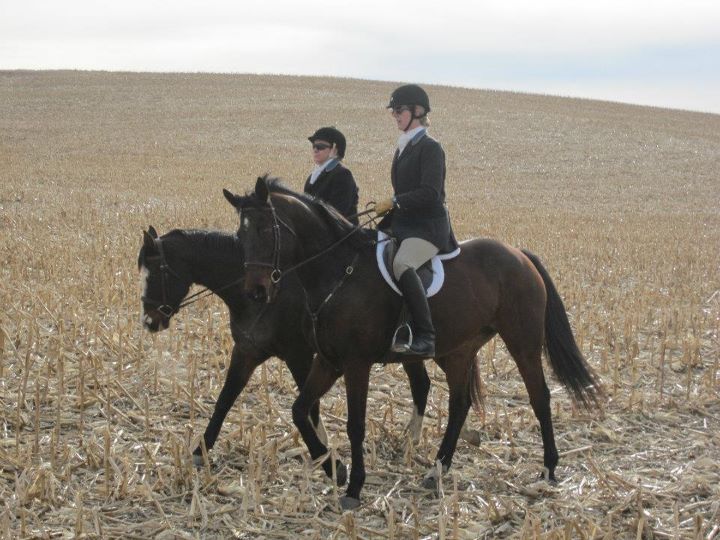
Charlie and I on a recent hunt. Yes, we're both very tall. He's 17 hands, I'm 6'3". My friend and her horse are normal-sized.

I haven’t had an unsound horse for a long time – until recently.  Now I have two on the injured reserve stall rest list.  Charlie and Sammy.  The prognosis is good for both of them.  We’ve now done the first 10 days of strict stall rest, the week of stall rest plus 10 minutes of hand-walking per day and now we are on to stall rest with 15 minutes of walking, this time mounted.  I’ll admit, I had some trepidation about getting on Charlie, a thoroughbred who, a few years ago, had a habit of bucking and now had a few weeks of stall rest under his girth.

But he was an angel.  Never set a foot wrong.  Of course, the horse that I thought would be easy peasy, Sammy, started with a humped-up back and had a few moments of corkscrew ears and some mumbling about how he could buck and he was a wild, wild horse.  Yeah.  Wild Sammy.  You can stop that now.

He didn’t buck, by the way.    Contrary to his wonted bad boy image, he’s a good man.  Sammy at an eventer derby

Anyway, now I am walking the two goofballs around the indoor for 15 minutes per horse every day.  It just so happens that these days I am also reading Charles De Kunffy’s book Training Strategies for Dressage Riders (on my rockin’ Kindle Fire, that thing is just stupid cool).  So I’ve got 30 minutes of walk to do and I start fooling around with CDK’s comments on use of the rider’s legs.  He says the inside leg is the driving leg and the outside leg is the guarding leg when asking for a bend.

So I walk and walk around the arena on a loose rein thinking about this.  Of course, the first time I put my leg on to play with it, each fresh horsie decides this is an invitation to trot.  Hmmm.  No, not the right button.  So then I make sure not to drop my leg back even an inch, but use it more straight toward the girth, leading with my ankle bone.  That got me leg yield.  Hmmmm, right idea, but not quite.  So I walked around a little more and thought about it.  Maybe if I…  What about if…

Sammy, in case you don't follow video links.

So I got to thinking about using my whole inside leg, from the hip down.  This would have to be without pinching with the knee. With my long-legged conformation it is not possible to use my lower calf/ankle, while keeping my knee against the saddle, so I keep my calf on and allow the knee to come off the saddle if necessary, but usually it is just a softening of its contact with the saddle.

After performing this thought experiment, I gave it a try.  What I noticed was that when I used my whole leg, my seat bones were more precisely placed and probably clearer to the horse.  I got really cool results.  The first night, after a few wobbles and comedies of errors, I could do a large figure 8 in my arena using only seat aids.  It was terrific!  The second night, not really believing this was possible – maybe the horses were so smart they were memorizing the pattern – I threw in a random circle.  Sure enough it worked.  Then I started playing with different-sized circles.  Some learning curve there, and after what has now been an hour of walking around, I am getting a handle on that.

But back to CDK’s idea of the inside leg being the driving aid.  Turns out that when I use that leg in a more energetic manner (still quiet and rhythmic, but a bit more emphatically) I get a tighter turn that remains in balance.  In retrospect, this makes perfect sense.  Look at the reach from the inside hind on this horse learning canter pirouette.

Soaking hooves

My wonderful farrier managed to come out yesterday and look at Elliot’s hoof.  Elliot has what my vet diagnosed as a “close nail”, not exactly a hot nail, but close enough.  In my farrier’s defense, the horse has shelly, thin hooves and is tough to shoe.  He’s been shoeing him a couple of years now and this is the first incident.  That’s pretty dang good.  So we took the nail out.  Elliot was improved, but not really right.  So last night my farrier came out again and dug around in the hoof.

I don’t know about you, but it always amazes me to watch someone really dig around in a hoof.  Hooves are so rugged and yet so fragile.  Such a delicate balance of strength and elasticity.  My farrier spent a good half an hour hoof testing and considering, digging a little, modifying and digging some more.

Lucky for me, a few weeks ago, I bought some of these hoof wraps.  They seemed like a really good alternative to the duct tape contraptions we all make.  So, just as my farrier was launching into the ‘soak, sugardine and duct tape boot’ spiel, I produced the hoof wrap to his nearly dumbfounded amazement.  I was lookin’ like a dang genius.  He put it on and it stayed on until this morning when I took it off during breakfast, for a soak.  See?  Money can buy happiness.

I held Elliot’s breakfast for him while he stood in the cross ties, left front leg dutifully parked in the bucket of warm water and epsom salt.  There is something really endearing about holding a feed pan for a horse while he eats his breakfast with single-minded zeal on a cool autumn morning, chasing the little bits around the pan, snuffling with pleasure.  After his breakfast, I still had 15 minutes left on the soak. Everyone else with hooves had left the building, headed back out to the pasture.  So it was just us.  I groomed Elliot, brushed his face, trimmed his bridle path, primped his mane and tail, fed him cookies and marveled in his horsie fabulousness.  I was invited to just spend time, rather than rush on to the next thing.  It was among the most thoroughly enjoyable 15 minutes of this week.

Equanimity through gravity

I fell off a 17 hand cantering horse today in public and even screeched like a little girl when I was airborn.

But, it was worth it.  I got to do this first:  

Yep, galloping and jumping over solid objects on a good horse is way fun, and yes I have video of the fall and no, I’m not uploading my happy self launching in to space for ya’all to see.  I haven’t ridden Prelim level eventing in two years and today was my day to get to do it again.  I’m still grateful I got to do it, though I do wish I could have ridden the rest of the course.  The fall happened because I didn’t ride the 5 stride bending line to the corner correctly.  Eddie was a rock star, it was total pilot error.

My thoughts on the day

The Point Two Air Vest we bought me is the best.  It worked flawlessly, and because of it I am not sore anywhere. Terrific.

Eddie felt fantastic in warmup and on course.  After fence 5, the Otter in the Water, Eddie landed and accelerated like a jet cleared for takeoff.  He got back in the game of running xc – land and go.  Loved it.  He galloped like a rock star after that.  Part of me wishes I could bottle the feeling of galloping with a 17h thoroughbred I know and love, and part of me is glad that it can’t be bought.

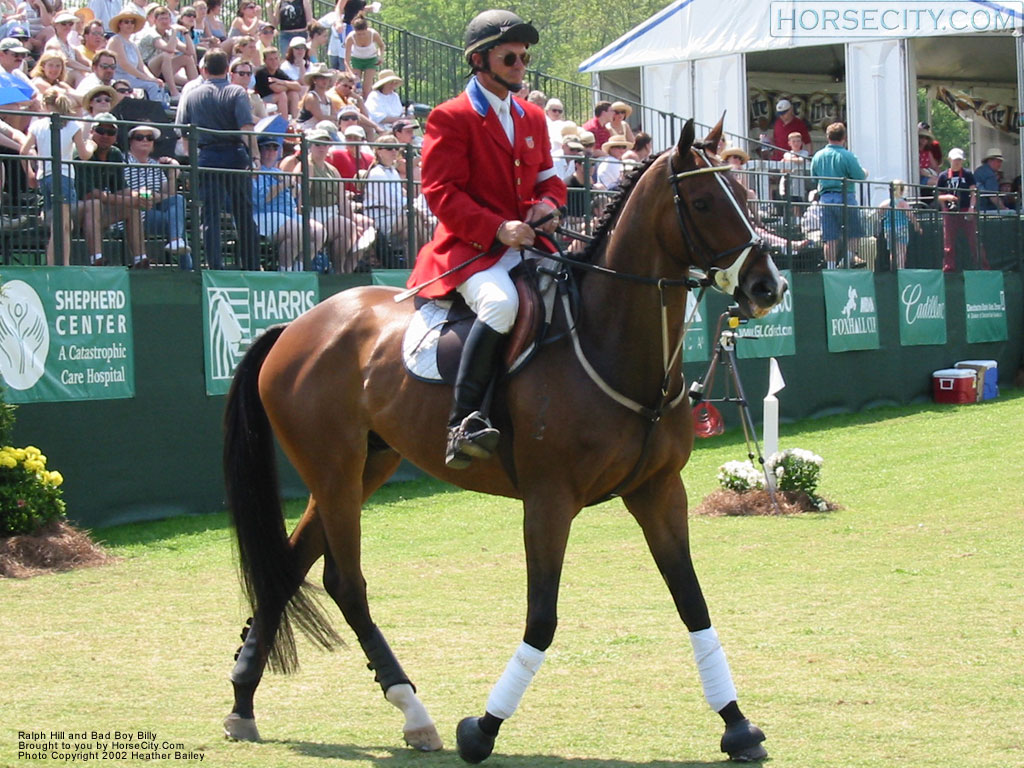
I got to warm up with Ralph Hill.

I just asked him since he was just standing there.  He was delighted.  I was delighted.  I tried to pay him, he didn’t let me.  If you don’t know who he is and you event, you are missing out on a real treasure. Google him or get in a clinic with him.  Stellar guy.

**************************

I’ve never been a huge big fan of the poem “If” by Rudyard Kipling, except that these two lines grabbed me years ago:

If you can meet with Triumph and Disaster
And treat those two impostors just the same;

That’s a tough one for anybody and I’ve been working at it, seriously, for years.  I’ve been observing myself with this in mind, and sometimes I am better at this than others.  It turns out that internal validation is the key.  Am I bad rider because I fell off and got eliminated at a USEA horse trial today?  External validation says, yes, I’m an eliminated rider which is pretty sucky.  Internal validation says I am no worse or better than I was yesterday.  Are “people” saying I am a bad rider because I missed the 5 stride bending line to the corner?  Doubt it. Frankly, I’m noticing it is kind of vain to think people are talking about me at all.  Most people went on with their lives when I stood up and was clearly unhurt.  Getting eliminated is probably a lot more important to me than it is to anybody else (with the possible exception of those who moved up because of my elimination today, and good on them!  That’s eventing, no worries.)

So. to those of you who read the ‘RF’ today after my name in the live scoring, thanks for your calls, your emails, your texts and your genuine concern.  I’m fine.  I’m actually pretty psyched.  Why? Because I didn’t get hurt, my horse didn’t get hurt, I didn’t hurt anybody else or me by being frustrated or acting like this is a world-ending big deal.  I’m actually a bit proud of myself for that.  And I worked with Ralph Hill, had a few laughs with hubby Jay, talked with some friends and made some new ones.  And I get to showjump tomorrow.  Woohoo.

Thanks, ya’all.

Perfect mirrors

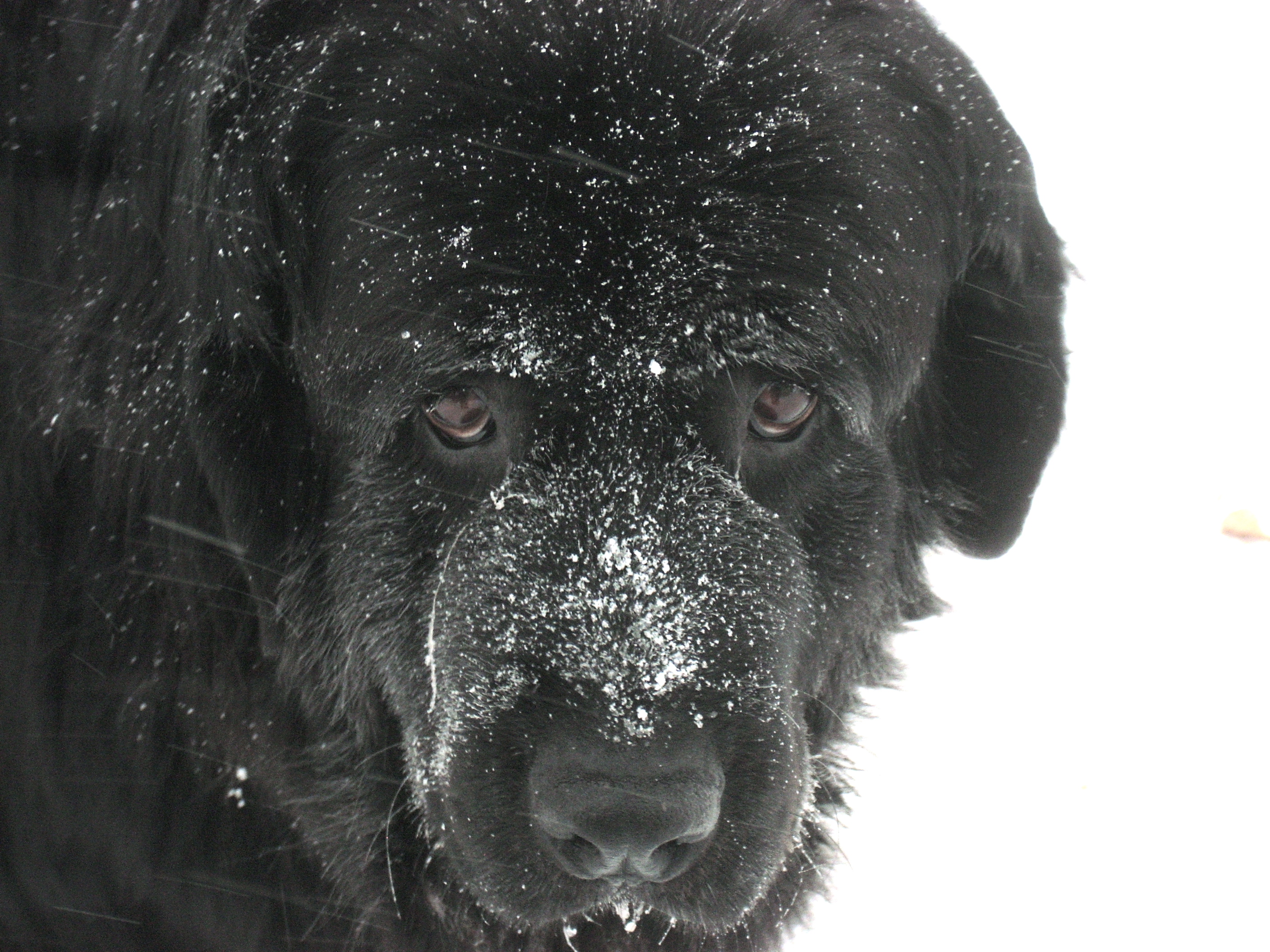
The Newf, playing the role of recently awakened grizzly bear

Our Newf Peppa has to take a few pills per day.  I’ve been spooning out about a tablespoon of peanut butter, hiding the pills in it, rolling it up and giving the resulting peanut butter ball of goodness to the Newf, who eats them down like a champ.  This plan was all good until I started to get slightly annoyed with the reality of having peanut butter combined with dog goo on my fingers every day.  I love peanut butter, and without the dog goo, I would just like it off my fingers like anybody would.  But the dog goo makes it a no deal.  So I rinse it off with water, but, I’ve found I need to use very hot water, because peanut butter plus cold water simply equals stickier peanut butter.  Paper towels work too, but the process is still unsatisfying.

Peppa the Newf in delighted phase

Then one day, I took a spoon straight from the dishwasher, freshly cycled.  It was a little bit damp as I used it to scoop my peanut butter.  And voi la!  The peanut butter didn’t stick!  It was easy to make it into a little ball that the Newf ate right up and I was left with clean hands.  Amazing!  The Newf and I were delighted.  Little discoveries like this can make all the difference.

That is how it was last week.  A student was going to be a bit late for her lesson, so I decided to tack up her horse and warm him up for her.  I had about 35 minutes, so I was able to have a nice long walk warmup, and then did some brief trotting and cantering.  Charlie did very well, moving forward in a relaxed and polite manner.  I was just finishing up when my student arrived.

Charlie, Camie and The Newf observe the work on the indoor arena. Must have bought the cheap seats to be by the muck pile...

This was to be a lesson on riding out of the arena, so I mounted up on Elliot and she got on Charlie and out we went.  Now Elliot is a beautiful animal who, a little unfortunately, has about the most earthbound walk possible. He’s not about to set any land speed records.  I gave my student the mission of keeping Charlie’s ears even with Elliot’s, which I guessed would be an easy goal, with Charlie’s long tb legs and his good warmup.

But there was trouble in paradise.  She was having a devil of a time getting Charlie to swing along, as I know he is capable of doing, and as he had done just a few minutes before.  So I reminded her of all the things riding instructors say.  Make sure you are following the stretch of his neck in walk, with your hands in an elastic connection.  Keep your legs on in a rhythmic fashion to support the walk.  And she was doing these things, I could see.

Still he walked slowly along, a wobbly beast that belied the completely enjoyable horse I had just been riding.  Against my better judgement I told her to give him a good nudge, aka a kick.  We got one quick step from that, and then a return to the slogging blobfest he was doing before.  As I comparatively glided along on Elliot and watched her work so hard for the same walk on her horse, I wondered very quietly and very seriously why it was so hard to get Charlie to walk with intention.

Charlie and I hunting

I decided to intently observe what she was doing.  After a few minutes it was clear to me that it wasn’t what she was doing, it was what she wasn’t doing.  Though her hands followed, and her legs rhythmically supported, her hips and back were stiffly resisting the forward motion.  There was go in her calves and hands, and there was stop everywhere else.  I had a postulate that Charlie’s resistance wasn’t his own.  He was simply reflecting what his rider was telling him to do.

I explained this to my student and then showed her what I was doing in my hips and back and how she could do the same thing to harmonize her aids and give Charlie clear direction.  Less than a minute later, because she’s a very talented learner, Charlie was swinging along in a confident, sweeping walk.  Horses are perfect mirrors of the energy of their riders.  Riders only need to make their energy unified and clear.

It was pretty cool.  Hope it helps you.


We’re all alone, together

My professional life is a double one, that is, that I spend half my working time with horses and riders, and half my time working with computers and research scientists.  When I’m not covered in horse hair, I work at Iowa State University in the Office of Biotechnology.  Here’s our website, which is a primary responsibility of mine.  I spend a lot of time listening to exponentially-intelligent people who have invested their time and talents in a formal education system.  Then it is my job to make some of what they say to me understandable to real people.  I make very good use of a digital audio recorder because there is no way I could get the details of what they say down on paper as quickly as the words flow from their genius mouths.  It is perspective-changing, empowering, and sometimes daunting to be around such sophisticated skill.

And so I got to thinking about how most of us learn to ride.  For me, there was very little formal education about it.  I flopped around on a wonderful black and white pinto shetland pony, playing cowboys and indians, “teaching” him to drive (that very humbling and funny story at another time), had a few lessons here or there, went to 4-H meetings and learned whatever I could, read a lot and basically trial-and-errored my way through it until later in my career when I could commit to some serious clinics with some teachers with very sophisticated skills.

Recently, I’d been thinking that my meandering path to horse competence was somehow flawed.  It lacked the discipline of the University-trained Ph.D., even though, by now, I have done enough independent study to have earned a Ph.D. in my chosen field.  But then I saw an article yesterday about Diana Pounds, who manages the Iowa State University website.  Managing a major university website is a huge responsibility.  It is the face of the university to the world on the internet.  It will be looked at by some of the brightest minds at the U’ and by thousands of prospective students and parents who may or may not choose to spend their tuition money as a result of what they see on the website.  Donors peruse it.  It is a big deal, and it is created, maintained and critiqued by a sea of people who are classically educated.

I was thinking about that the other day when I read an article written about Diana’s work.  From the article:

And she’s well acquainted with plodding her way through unfamiliar cyberspace, being totally self-educated in the ways of the Web.

“Lots of us are self-taught, because we had to be,” Pounds explained. “The technology sprang up, and we all had to learn to do HTML.” Pounds’ curriculum included a variety of online “how-to” manuals, as well as “20 to 25” books on programming and Web design.

So, Diana, then, is producing a web site  at a very high level, with millions of dollars on the line, with no formal training to do it.  No Ph.D. of web design.  And people look to her for help and answers, and she delights in her work and is great at it.

Learning to ride horses for many of us is like that – an adventure in independent learning.  Just you and your horse figuring it out.  Because most people learn independently, they don’t have the benefit of being able to say to themselves or others, “Hey, I can do this, I’ve got my Ph.D. for goodness sakes.”  That sort of external validation is a daily boost to the confidence.

But as riders, we can earn external validation every day.  Horse are perfect mirrors of their riders, just like a computer is the perfect mirror of its input.  Garbage in, garbage out, of course, but also, great input can result in great output.  Put the HTML in correctly and the page happens.  Miss a letter of the code and some really wacked errors will happen.

In the case of horses, if the horse understands what the rider is communicating, the horse’s expression is relaxed and happy and he performs his task with ease.  Good input creates good output, just as in the case of learning to make a web page.  Nonsensical input to the horse, even something as minute and invisible as rider tension, can result in bad output.  When you get the riding right, just like getting the HTML coding right, you get something which is a pleasure to experience.

So ride on, have some success, and be fearless, make mistakes.  Mess around with the code.  See what your horse says to you and try again.  You have a perfect mirror right there in your horse – your personal professor of external validation.

Learning sitting trot

Sitting trot can be a pain in the butt, and a pain in the “front butt” too.  The bumping that accompanies learning to elastically sit a horse’s trot can be a real trial, and one you don’t probably choose to discuss with your non-horse friends on girls’ night!

The first inclination when things get painful in the nethers is to blame the saddle, and there are probably some small minority of saddles that are so ill-fitting as to be the source of the problem. However, if you’ve tried several, many or myriad saddles and you can’t find one that is comfortable for sitting trot for you, the one constant is not the saddles!  For fun, let’s just entertain the idea that it might be technique rather than saddle.  My Dad’s voice rings in my head: “It’s a poor workman who blames his tools.”

What is happening to produce discomfort?  When a rider’s back is not relaxed and elastically following the movement of the horse, there has to be a bump between the moving thing (the horse, going up and down and forward) and the still thing (the rider, who wants to be still relative to the horse, but she thinks she can do that by holding herself still through the use of rigid muscles. “Still relative to the horse” in sitting trot means both keeping her hips and shoulders over the center of the horse at the front of the saddle as he moves forward (relatively easy for many), and elastically absorbing and releasing the energy of the upward bound and downward release of the trot (relatively difficult for many).

Picture a person learning to dribble a basketball.  At first, their hand slaps the ball down with an audible bump.  Over time, the person learns to catch the energy of the ball bouncing off the ground and then smoothly return and even re-direct that energy down.  Soon the person can dribble the ball anywhere she wants.  There is no bumping against the ball, only catching the energy of the ball going up, in an open, relaxed and elastic hand,  and then releasing the energy back down.  This accepting and releasing of the energy coming up and going down is what we do in good sitting on trotting horses. The horse is like the ball sending energy up in his bounds up and forward and releasing it in his return to the earth. In good sitting trot, the tripod of your pelvis is engaged with your lower back to produce the relaxed and elastic catching and releasing of that energy.

Most of us think we should be born knowing how to sit the trot, so we expect it to be immediately effortless.  It is afterall, just sitting and we do that all the time.  (More correctly, riding sitting trot is active stillness.)  And it looks so fabulously easy when some riders do it.  Because people tend to think that a connected sitting trot is their birthright, they get in there and wing it, and unless they are of the 1% to whom it actually IS their birthright, they find themselves surprised to be bumping the saddle with their pelvis somehow (some with the back of the pelvis, some with the front) and it hurts – just like slapping a basketball with your hand is not pleasant. Except with a basketball, we would be thought very silly if we blamed the ball for hurting our hands while we are slapping it!

To compound the problem, without patient development of the sitting trot skill, there is a natural tendency to tighten the thigh and back to defend oneself against the bumping that develops.  This keeps the pelvis tensely tilted up off the saddle, which stops the bumping, but it disqualifies the possibility of real connection and influence on the horse, and, further, encourages stiffness in the horse, which then makes the gait harder to sit!  It is a vicious cycle that can be circumvented with knowledgeable help and patient attention.  Here is my blog about regaining the sitting trot after I lost it when I shifted my sacrum.

Watch George Williams (love his riding.  Yeah, I know.  I am kind of like John Madden talking about Brett Favre, but stay with me here.) in sitting trot in this video.  Try not to be distracted by the gorgeous horse or surroundings.  Look at his pelvis and lower back.  They are moving.  A LOT. Riders have to be fearless and elastic in sitting trot.  You can only be those things when you actually have help in learning to sit the trot by slowing things down and being patient with yourself while you do it.  The payoff is uber cool.  Real connection with the seat in sitting trot is a cornerstone to really good riding.

Stopping nit-picking and George Williams

Lots of things going on today.   First I rode Bino for his daily Cowboy Song walk hack around our little valley.  The song that popped into my head today is, “I know where love lives.”  I don’t know where these songs come from, but I go with it.  If you’ve been reading, you know that he has navicular and we are taking it very easy with him and enjoying what we can do together.  Taking him on these hacks has a whole other dimension of enjoyment that I’d forgotten about–riding just to ride.  Since I train horses, I had gotten into the habit of correcting any behaviour that could potentially get the horse in trouble with me or his owner in the future.  Bino is in a different situation, though, so I get to let the little things slide.  When I brought him to the mounting block today and swung a leg over, he didn’t wait until I’d entirely picked up my outside stirrup before he walked off.  Usually I would correct this.  Today, I just let it slide.  When we were walking through some tall grass on the ride, he grabbed a mouthful on the way by.  So what?  No worries.  I let him munch away.  This must be what it is like when a mom realizes her kid is an adult, that she doesn’t have to, nay, shouldn’t, correct every last faux pas, but rather let the child live his life as he would like.  Some moms never get to that point, to the constant annoyance of their adult children.  Today I got to be the mature parent with the grown child.  I got to enjoy his personality, strengths and faults, with no judgement, and totally enjoyable for both of us.  I didn’t see that coming.  Sometimes, on these beautiful autumn days, in the soft footing of the soybean fields, I think, “oh, he’s alright, maybe we are making the wrong decision.”  But then, almost immediately when I think that, he trips as he often does.  Since his feet hurt, he doesn’t pick them up very high, and therefore often trips.  I also think of the radiographs and the coming frozen ground and the painful prognosis.  I pull my mind away from that and I let him munch grass, and pat his thick black neck.

Then it was on for a ride on Elliot.  You may recall a few weeks ago, that I found my sitting trot after it had left me for a short hiatus.  (Ok, 6 weeks doesn’t seem short at the time…)  Well, it turns out I didn’t really have it back yet.  I had it back for working trot, and I had it back for Eddie’s trot, but I didn’t have it back for Elliot’s extravagant warmblood trot.  I could only sit that well for about 5 strides, after which I would be left unceremoniously behind like some turnip off the wagon, and I would have to resort to posting to not be too much of an annoyance to Mr. Floaty Trot!  But there is no crying in baseball or dressage (ok, there probably has been plenty of crying in dressage, but a lot of it is hidden behind post-ride wine and cheese clutches) so I had to figure out what the real problem was.

So I pulled out pictures of my riding to see what was going on.
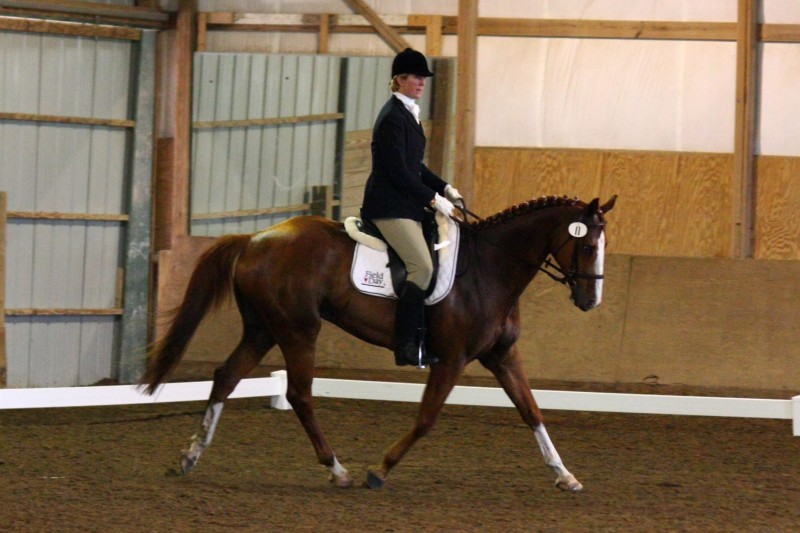
I have no ego about my riding.  I am only as good as my horses say I am, and they are pretty clear communicators.  I’m not trying to be better than anybody and I know I am not as good as some.  So, when I look at pictures of my riding, I am pretty ruthless, and it doesn’t bother me in the least because my heart is in the right place.  Intent is everything.  I had to explain that because when I look at this picture I think, “Overall, not a bad pictures, but 1) more inside leg, less inside hand, and 2) let go in your back, let your pelvis come forward and everything would straighten out, silly.  😉

Ok, so the first comment is fairly self-evident.  If you’ve ridden with a dressage instructor and not heard “Let go of the inside rein!” either you are a riding savant or your instructor is busy texting in an Ebay bid on Totalis tail hair during your lesson.

The second comment is more subtle.  “let go in your back, let your pelvis come forward and everything would straighten out.”  When we ride, we should sit on the tripod of our two seat bones and our pubic bone.  In the picture above, I am sitting almost solely on my seat bones, because my back is slightly braced.  If I would let go on my back, which is to allow the lower back to come forward (and the belly button to come forward), the pubic bone would come down to support my weight, much like the front wheels of a landing airplane come down after the back wheels touch down.  When all three sets of wheels are on the ground, things are very stable (and the passengers are much happier!).  When the rider is properly balanced on the tripod everything else “straightens out”.  By that I mean that the legs and the upper body may become correct.
Landing gear down. Why George William is my riding hero.

Here is a picture of George Williams who always has the landing gear down.  You might remember that I ran into him at the WEG.  He’s a very kind person too.   Most excellent.  In this picture and a million others, he has beautiful position in his upper and lower body because the center is correct.  Now, I am not saying I am a bad rider, but I’m saying George is a great rider.  If you compare my photo with Geo.’s, you’ll see that he is better able to stretch down in his leg and his upper body is much more solid than mine in that picture above.  Because I am not elastically  following the motion of the horse’s back in my lower back above, I am forced to bring my upper body forward to compensate.  Because Geo. has allowed the natural curve of his lower back to act like a natural spring to keep him wholly connected in his seat to the horse, his upper body stays nicely aligned over his pelvis.  My leg isn’t bad, but it appears jammed up into my hip socket.  My stirrups aren’t too short, my pelvis is at the wrong angle.  Geo’s leg seems to have an elastic connection to his hip.  All these differences are pelvis angle.  Front landing gear up vs. front landing gear down.

So I was playing around with that the last few weeks trying to regain the ability to sit Elliot’s fancy lengthened trot.  When I focus on relaxing (this is an oxymoron.  One can no more focus on relaxing than one can turn their head to test their peripheral vision.) my pelvis and to let my lower back move with the horse rather than sitting against it, I can fairly easily sit his lengthened trot for long periods of time.  The trick is in not resisting — in reminding myself to flow with the horse in my lower back.  So I channel George a lot.